


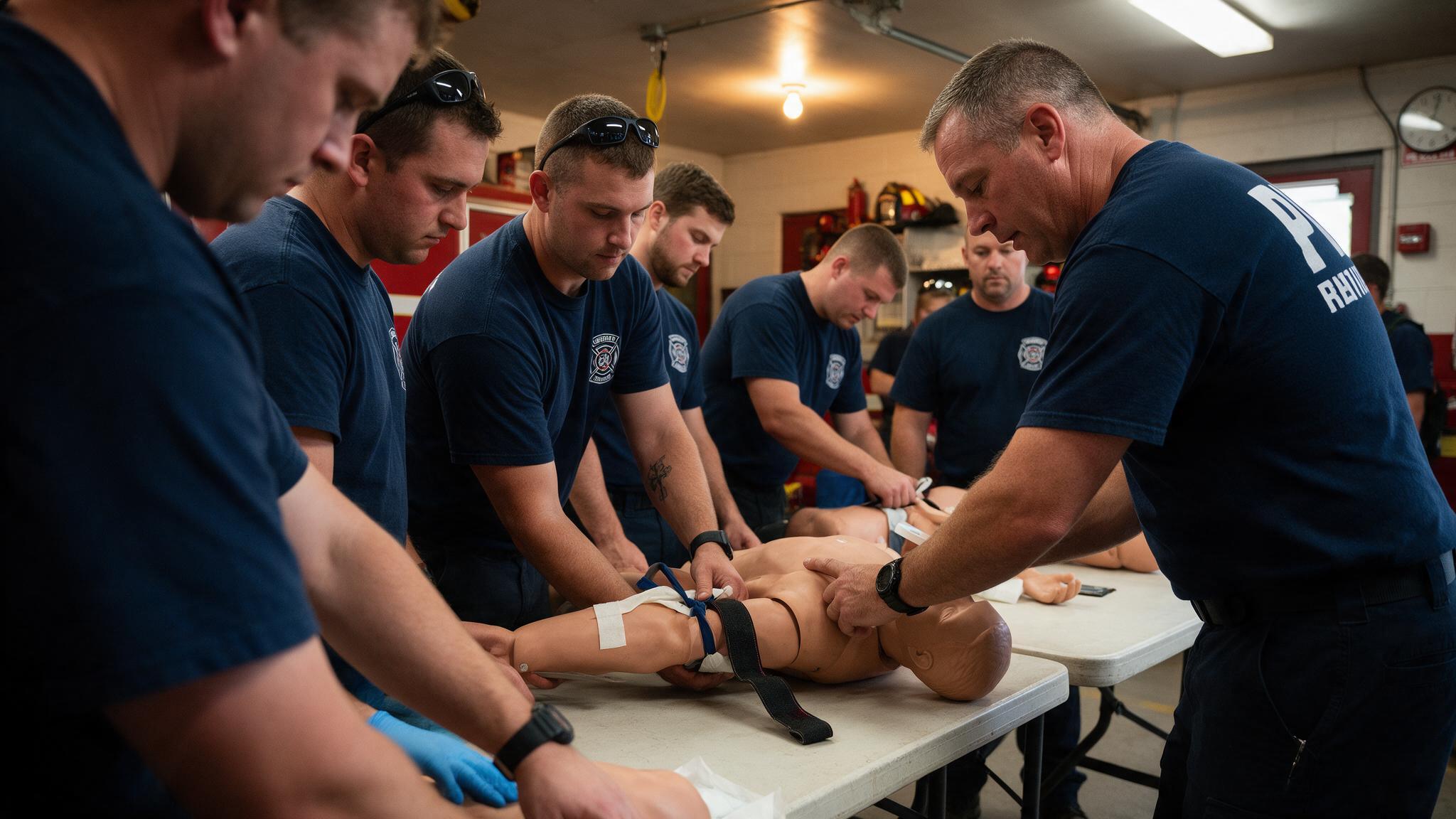


Preparedness training follows money. Large metropolitan agencies buy capability with budget; rural agencies are expected to produce it with volunteer time and donated equipment. The result is a preparedness gap that widens every year — not because rural communities care less, but because the training marketplace was never built for them.
That gap is fixable, and training is the cheapest place to fix it.
Why Rural Training Fails
- Cost and travel. Certification courses run in metropolitan centers, requiring travel, lodging, and shift coverage a volunteer department can't fund.
- Relevance. Curriculum built for urban response doesn't match rural reality: longer transport times, limited resources, and community members as the true first responders.
- Retention. One-off training decays. Without repetition and exercise, capability disappears within months.
- Time. Volunteers have jobs. Training that eats entire weekends gets skipped.
What Effective Training Looks Like
Capability comes from training that is delivered locally, sized to the community's actual risk profile, and repeated until it becomes muscle memory rather than memory. Preparedness education works when it targets three audiences at once: agencies, volunteer responders, and the community members who will be on scene before anyone with a radio arrives.
Planning is the other half. Training without a plan trains people for nothing in particular. Real programs pair skills with the frameworks those skills serve — who does what, when, and how it's decided.
What This Looks Like in Practice
A rural fire district trains volunteer responders and community members together in practical, scenario-based exercises drawn from the county's actual hazards. Two years later, when the flood comes, the first actions on scene are trained ones — not improvised ones.
Conclusion
The preparedness gap isn't a motivation problem. It's an access problem. Training delivered at no cost to agencies and individuals who can't afford it changes the math entirely.
Want training that fits your community? Contact us — no cost to agencies or individuals who can't afford it.
